A family’s history, told through the lens of the cinema.
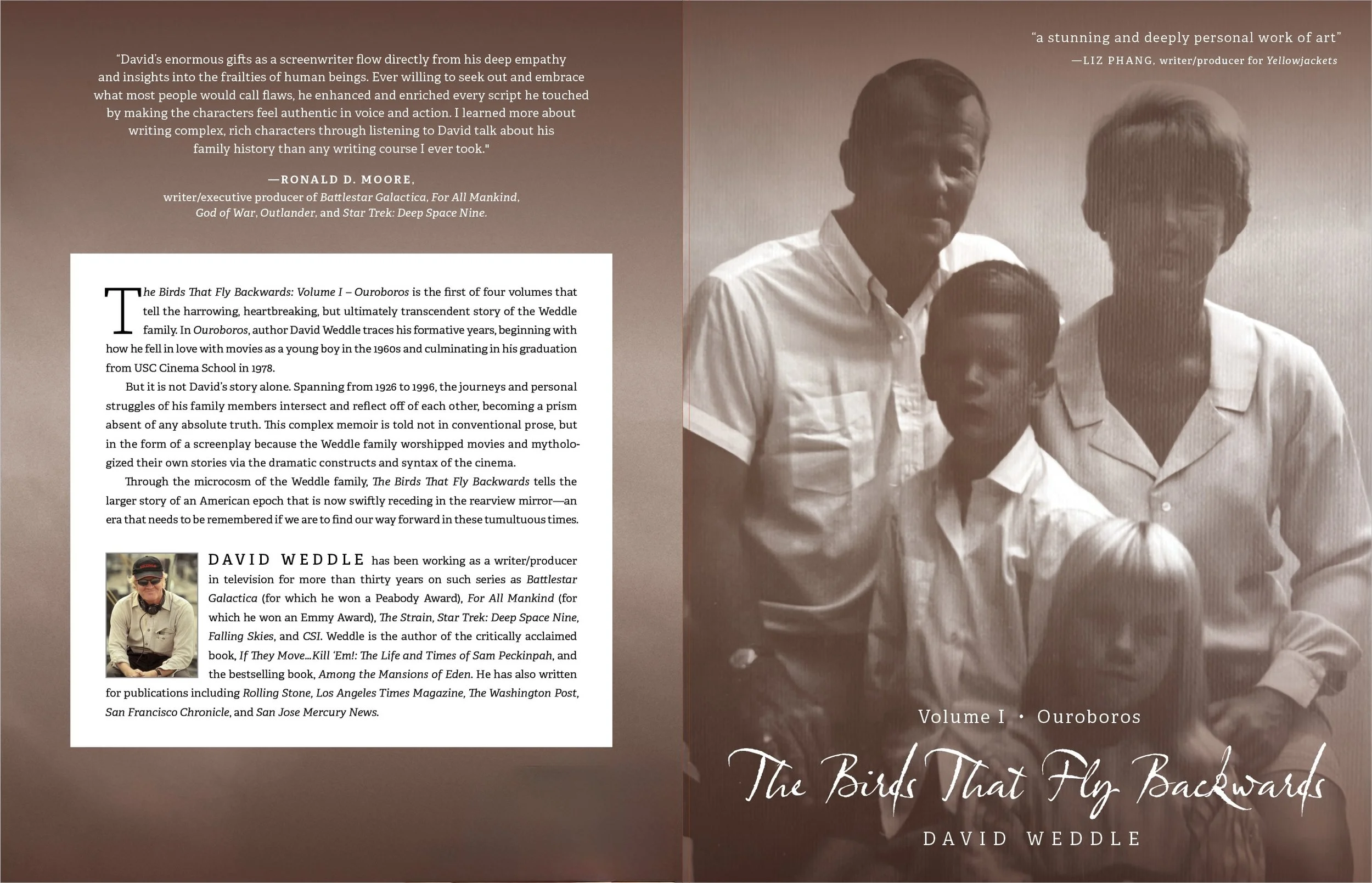
From the writer of Battlestar Galactica, For All Mankind, and The Strain comes a transcendent new memoir. Experience the harrowing and heartbreaking journey of the Weddle Family -- a story of an American epoch told in the unique syntax of a screenplay.
The Script-to-Page Experience
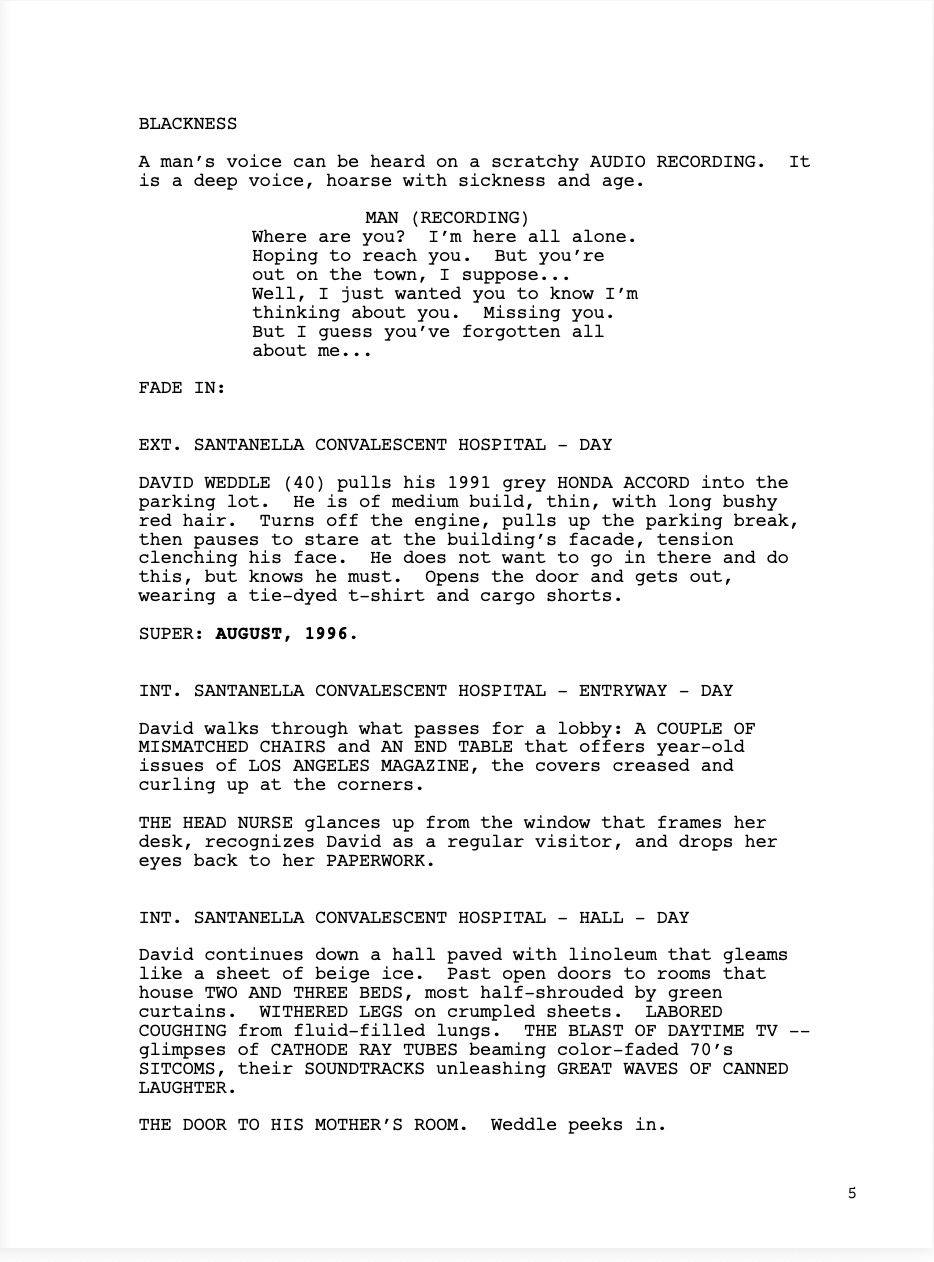
Breaking the traditional "rules" of the novel, David utilizes the same script format he mastered while writing for CSI and For All Mankind. This isn't just a book; it’s a blueprint for the imagination. This style honors the fast-paced, high-stakes energy of a television production, delivering a "binge-able" reading experience that stays true to David’s lifelong obsession with the silver screen.
Acclaim from the Masters of Modern Storytelling
“David’s enormous gifts as a screenwriter flow directly from his deep empathy and insights into the frailties of human beings. Ever willing to seek out and embrace what most people would call flaws, he enhanced and enriched every script he touched by making the characters feel authentic in voice and action. I learned more about writing complex, rich characters through listening to David talk about his family history than any writing course I ever took.”
-- Ronald D. Moore, writer/executive producer of Battlestar Galactica, For All Mankind, God of War, Outlander, and Star Trek: Deep Space Nine.
Whether he’s writing formidable sci-fi and what-if fiction (Battlestar Galactica, For All Mankind) or fearless biographies of the director Sam Peckinpah (If They Move…Kill ’Em) and the city of Beverly Hills (Among the Mansions of Eden), David Weddle digs beneath surface grit and glitter to unearth the crucibles where characters are made. In The Birds that Fly Backwards he uses a screenplay/memory play form to look back in anger, and in love, at 60 years of American life. It’s a self-portrait of an artist and his influences (from Red Skelton and Ken Kesey to Buster Keaton and Sam Peckinpah) that’s also a turbulent group portrait of a conflicted middle-class family. Weddle grapples with the highs and lows of the “Greatest Generation”—and the generation that followed it—with a raw cunning that brings it all to frank, unruly life.
— Michael Sragow, author of Victor Fleming: An American Movie Master, former film critic for The New Yorker, The Atlantic, and Rolling Stone.
David Weddle has created something really extraordinary here — a kaleidoscopic journey into the heart of his own family that, in its specificity, empathy and honesty, is the antithesis of self-indulgent. It’s universal. It is essential. Weddle bravely uses his incredible power as a screenwriter to make us see, hear, and feel every moment of his story, which spans decades. As we read it, we are right there with the Weddles, in all their vulnerability, humor, cruelty, longing, creativity and, more than anything, their love for one another. Is this a limited series? A novel in script form? However you want to classify it, The Birds That Fly Backwards is a stunning and deeply personal work of art.
-- Liz Phang, writer/producer for Foundation, Yellowjackets, Locke & Key, The Haunting of Hill House, and The Strain.
David Weddle Interview | The Birds That Fly Backwards: Volume I – Ouroboros
David Weddle Interview
David Weddle Interview | The Birds That Fly Backwards: Volume I – Ouroboros Award-winning television writer and producer David Weddle joins us for an in-depth conversation about his powerful new memoir, The Birds That Fly Backwards: Volume I – Ouroboros.
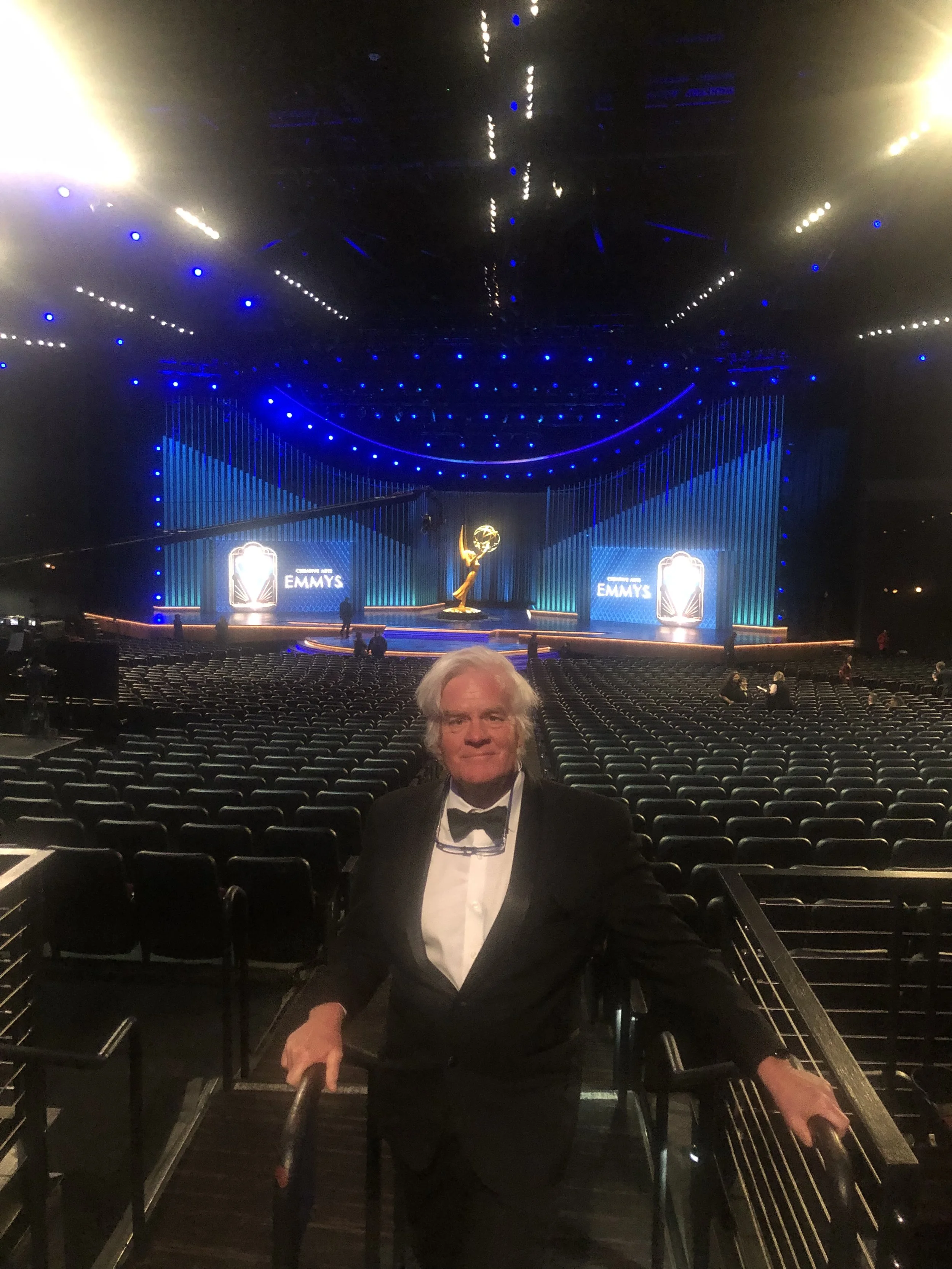
Best known for his work on Battlestar Galactica, For All Mankind, Star Trek: Deep Space Nine, The Strain, CSI, and Falling Skies, Weddle discusses the deeply personal story behind his latest book, why he chose to write it as a screenplay, and how family history, memory, film, and storytelling shaped both his life and career.
The Life and Craft of David Weddle
David Weddle fell in love with movies at an early age. His father—a “Greatest Generation” Marine who fought on Guadalcanal during World War Two—infected him with the cinema bug from the time David could walk. James Weddle constantly took his young son to movies and watched old films with him on television. Jim grew up in the rugged steel mill town of McKeesport, Pennsylvania, where his father also took him to the movies every weekend. Young Jim became intoxicated with show business and passed that passion on to his son.
During every screening, Jim would quiz David on the names of actors, writers, directors, even cinematographers. His father’s heroes became David’s heroes: Red Skelton, Buster Keaton, Jerry Lewis, Marty Feldman, and Sam Peckinpah. Jim facilitated David’s acceptance to USC Cinema School, regarded in the late 70s to be the best in the country. Jim paid the enormous tuitions by scraping and saving and sacrificing. He bankrolled the production of a play David wrote and directed—Under the Nutcracker—about their mutual hero, Buster Keaton.
James Weddle was a born salesman who—without a high school diploma—worked his way from a retail peddler of house paint to a vice president of a Fortune 500 paint company. David inherited those sales skills and applied them with a vengeance after graduating from USC. He snuck onto every studio lot in Hollywood by jumping fences or bluffing his way past guards with phony deliveries. In the process, he met many of his heroes—Marty Feldman, Klaus Kinski, Sam Peckinpah, Albert Brooks and Jerry Lewis—by boldly walking into their offices and introducing himself.
At the same time, he worked every shit job imaginable to support his writing: polishing the floors of aircraft hangars, maintaining inventory in hardware stores, unloading semi-trucks full of fiberglass insulation, and working as a room service waiter at the Sunset Marquis Hotel, which catered to hard-partying rock stars. At several points in his 20s, David became discouraged as he watched most of his friends establishing themselves in professional careers, getting married, buying homes, and starting families. He considered quitting show business and getting a real estate license. But his father would not let him. “You are going to make it!” Jim would tell his son. “The Nose Knows. You have the talent. I wouldn’t say that if I didn’t believe it. I won’t live to see it, but you are going to ring the bell!”
Desperate to find ways to make money via writing, David began selling stories to magazines. He had no journalism degree, but he didn’t let that stop him. David wrote blizzards of query letters and worked the phones, and sold his product to one editor after another—progressing from supermarket throwaways to penning cover stories for such publications as L.A. Weekly, Rolling Stone, Los Angeles Times Magazine, California Magazine, San Francisco Chronicle Magazine, The Washington Post, Sight & Sound, and Film Comment.
The Rolling Stone article was about a new hero who David found on his own: counterculture icon Ken Kesey, author of One Flew Over the Cuckoo’s Nest and Sometimes a Great Notion. In many ways, Kesey stood for everything Jim Weddle hated about the hippie movement. Yet, when he met Kesey, Jim chose to rise above his personal prejudices, stuck out his hand and said, “I want to thank you for everything you have done for my son.”
David’s success as a magazine journalist led to the publication of his first book, the critically acclaimed “If They Move... Kill ‘Em!” The Life and Times of Sam Peckinpah. But his father—who took David to see Peckinpah’s masterpiece, The Wild Bunch, when he was 13—did not live to see the book come out, or the acclaim that it garnered. Nor would he live to see how David parlayed the book’s success into a career as a television writer, working with such creative giants as Ron Moore and Guillermo del Toro on such shows as Star Trek: Deep Space Nine, Battlestar Galactica, CSI, Falling Skies, The Strain, and For All Mankind.
To this very day, when David steps onto a soundstage at Sony Studios, he thinks of his brilliant, tormented, and tormenting father, who gave him a dream and the means to pursue it—a dream James Weddle did not live to see realized.
Explore More from David Weddle
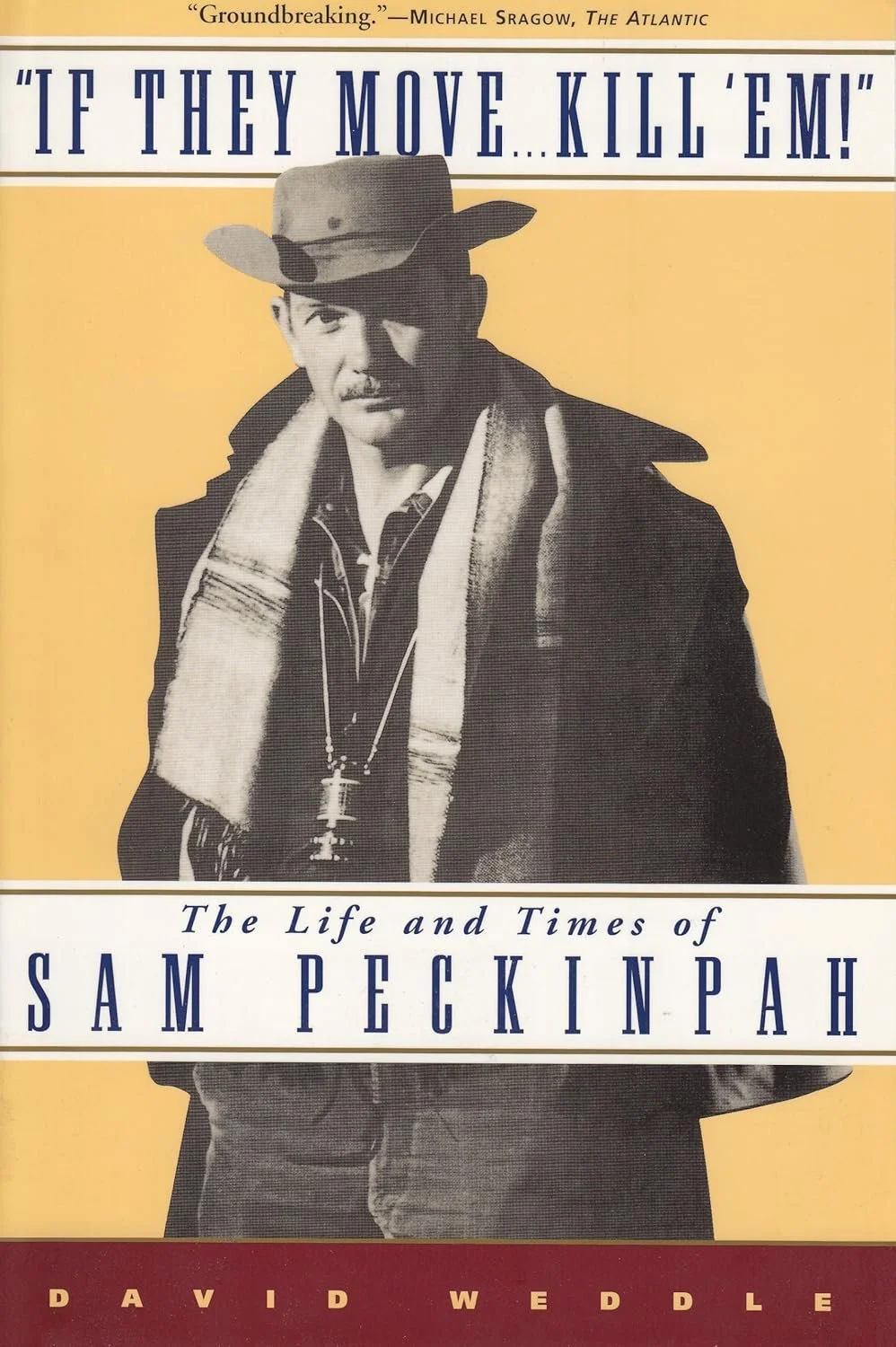
The definitive biography of a cinematic legend, If They Move... Kill 'Em! captures the chaotic life and brilliant career of Sam Peckinpah.
From his roots in a rugged California frontier family to his rise as the "hottest writer in television" and director of masterpieces like The Wild Bunch, David Weddle chronicles Peckinpah’s journey with novelistic flair. This is the story of an audacious American original—a man torn between romanticism and nihilism whose violent, vivid films inspired a generation of filmmakers, including Martin Scorsese and QuentinTarantino.Essential for any film lover
Brief, wild, and essential for any film lover.
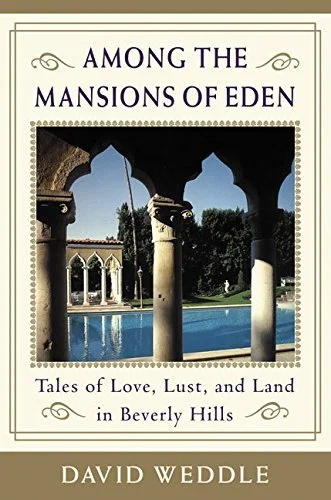
An insightful and "dishy" deep dive into the mythos of Beverly Hills, Among the Mansions of Eden peels back the gilded gates of America's most opulent city.
David Weddle explores the rapturous and often tragic pursuit of the American Dream through a cast of unforgettable characters—from Hollywood legends like Milton Berle and the architects of Rodeo Drive to hedge-fund moguls and the city's darker underworld of hucksters and thrill-seekers.
Part social history, part spellbinding exposé, this is the definitive portrait of wealth, power, "... and the lust for status in America's Palatine Hills."